
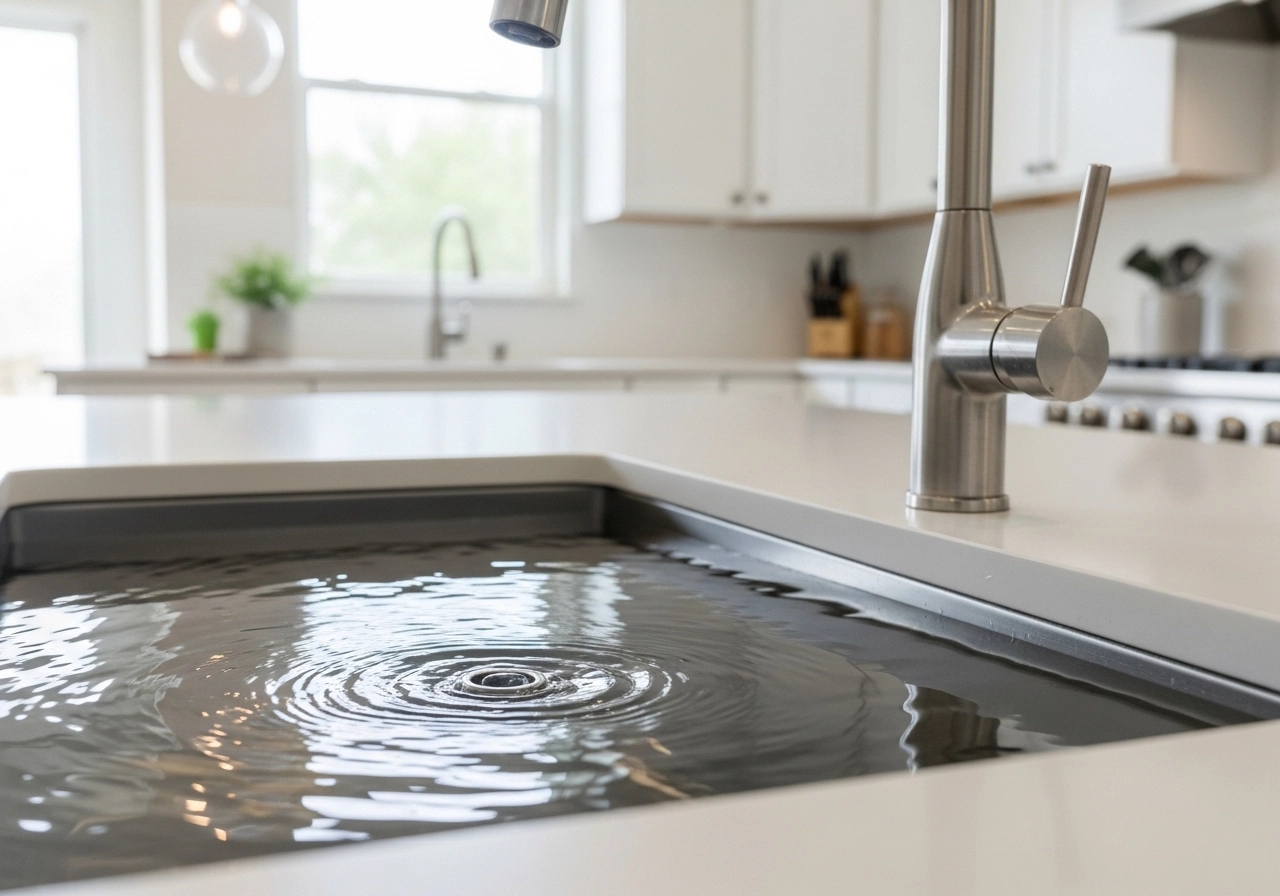
Why Does My Drain Keep Clogging? A Woodland, CA Homeowner Guide
Table of Contents
You clear the drain. A few weeks go by. It clogs again.
If this sounds familiar, you are not dealing with bad luck. You are dealing with a cause that keeps repeating itself, and until that cause is identified and actually fixed, the cycle will not stop.
At Blueline Plumbing, this is one of the most common calls we get from homeowners in Woodland, Davis, Vacaville, and West Sacramento. The good news is that most recurring drain problems have a clear explanation once you know what to look for. This guide walks through the real reasons drains keep clogging, what actually fixes each one, and when it makes sense to stop troubleshooting on your own and call a plumber.
What Most Homeowners Get Wrong About Drain Clogs
The instinct when a drain clogs is to grab a bottle of Drano or a plunger, get the water moving again, and move on. That works fine for a one-off clog. But if the drain backs up again a few weeks later, that approach is not solving anything. It is just buying time.
Recurring clogs almost always mean one of two things: either the original blockage was never fully removed, or there is an ongoing condition inside the pipe that keeps creating new blockages. Pouring chemicals down the drain or plunging repeatedly does not address either of those problems. In some cases it makes things worse.
The only way to stop a drain from clogging repeatedly is to figure out what is actually happening inside the pipe.
The Real Reasons Your Drain Keeps Clogging
Hair and Soap Buildup in Bathroom Drains
This is the most common culprit in bathroom sinks, showers, and tubs. Hair and soap scum bind together inside the pipe and form a sticky mat that catches everything else coming through. Over time the mat grows thicker until water can barely pass.
The reason it comes back so quickly after you clear it is that most DIY methods poke a hole through the buildup rather than pulling it out. The residue left on the pipe wall catches the next round of hair within weeks and the drain is slow again.
What actually solves it is a drain snake that grabs and physically removes the buildup from the pipe, not just pushes through it.
Grease and Fat in Kitchen Drains
Cooking grease goes down the drain as a liquid when it is hot. It solidifies on the inside of your pipes within a few feet of the drain opening. Month after month that layer gets thicker, and eventually the pipe gets narrow enough to back up regularly.
This happens even when homeowners are careful. A small amount of fat from rinsing a pan, repeated daily, adds up faster than most people expect. Running hot water while you rinse helps slow it down but does not prevent buildup over time.
The fix for an established grease problem is rooter service or hydro-jetting to physically scour the pipe walls clean. Dish soap and hot water will not cut through grease that has been accumulating for months.
Tree Root Intrusion
Woodland has mature trees throughout most of its older neighborhoods, and their root systems are always growing toward water. Sewer lines running underground are a target. Even a hairline crack in an older clay or cast iron pipe is enough for a fine root tip to get in, and once inside, roots grow quickly and catch debris with every flush.
The signs that roots might be involved are specific. Multiple drains in the house run slow at the same time. The toilet gurgles when the sink drains. You have had the drain cleared professionally and it keeps coming back within a month or two. Your home was built before the 1980s when older pipe materials were common.
A camera inspection is the only way to confirm root intrusion. Once confirmed, rooter service clears the roots, and in more serious cases the pipe may need lining or partial replacement.
Mineral Scaling from Hard Water
Woodland’s water supply comes from the Sacramento River system and carries dissolved calcium and magnesium. These minerals deposit on the inside walls of pipes over years, a process called scaling. The pipe’s interior gradually gets narrower, flow slows down, and debris catches much more easily on the rough mineral surface.
This tends to show up in homes that are 15 years or older. You will not notice it happening gradually. You notice it when the accumulation crosses a threshold and suddenly everything in the house is draining slowly.
Hydro-jetting removes scale effectively. A whole-house water softener helps slow down future buildup.
A Partial Clog That Was Never Fully Cleared
This one is behind more recurring clogs than most homeowners realize. You had a backup, you used a plunger or drain cleaner, water started flowing again, and you figured it was done. But in many cases the clog was not removed. It was compressed or shifted just enough to restore some flow, and it stayed in the pipe. New debris accumulates on top of it over the next few weeks until the drain backs up again.
If your drain clogs on a regular schedule, say every three to six weeks, this is very likely the explanation. The fix is a drain snake or rooter service that physically removes what is in there rather than pushing through it.
Flushing the Wrong Things
This one applies to toilets and bathroom drains both. Wipes labeled as flushable do not break down the way toilet paper does. They hold their structure, travel a short distance, and then accumulate at the first bend in the pipe. Cotton balls, paper towels, dental floss, and similar items do the same thing.
Once one of these items lodges in the pipe it acts as a net for everything that follows. The drain may work fine for a while and then back up suddenly when enough material has collected.
A toilet auger retrieves the blockage. After that the fix is simple: only toilet paper goes in the toilet.
A Blocked Vent Pipe
This one often goes undiagnosed for a long time because it does not look like a clog. Your drain system relies on a vent pipe that runs through the roof to allow air into the system. When that vent is blocked by leaves, debris, or a bird nest, the drain lines develop negative pressure and everything drains slowly even though the pipes themselves are clear.
The giveaway is gurgling. If you hear gurgling from the toilet when the sink drains, or from the sink when the toilet flushes, the vent is worth checking before assuming there is a pipe blockage.
A plumber needs to inspect and clear the vent stack. It requires roof access and is not a safe DIY job.
Why Chemical Drain Cleaners Are Not the Answer for Recurring Clogs
Drano and similar products have their place for an occasional minor clog. For anything that keeps coming back, they create more problems than they solve.
They do not remove blockages. They dissolve part of an organic clog at the surface but rarely eliminate deeper material. The remaining debris re-accumulates faster because the pipe surface is now rougher and stickier.
They damage pipes over time. The active ingredient in most chemical drain cleaners is sodium hydroxide, which generates significant heat as it reacts. Repeated use softens older PVC pipes and accelerates cracking in pipes that already have small defects.
They create a safety hazard for your plumber. If the chemical treatment does not work and you call someone in, that plumber now has to work in drain water contaminated with caustic chemicals. We always ask whether drain cleaner has been used before we start work.
For a slow drain that is not fully blocked, a baking soda and hot water flush is a reasonable short-term measure. For anything recurring, skip the chemicals and have the pipe properly cleaned.
What Professional Drain Cleaning Actually Involves
There is a significant difference between what you can do with a plunger at home and what a plumber does. Here is what each method involves and when it gets used.
Drain snake. A flexible steel cable fed into the drain until it reaches the blockage. The cable rotates to break up or grab the clog and pull it out. This is the right tool for most hair, soap, and single-object clogs in bathroom and kitchen drains.
Rooter service. A heavier-duty machine with cutting attachments designed for tougher material deeper in the line. Grease buildup, tree roots, and main sewer line blockages generally call for rooter service rather than a standard snake.
Hydro-jetting. A high-pressure water jet that scours the inside of the pipe completely clean. This is used for severe grease accumulation, mineral scaling, or situations where the buildup is throughout the whole line rather than at a single point.
Camera inspection. A small waterproof camera fed into the pipe to show exactly what is inside. When a drain keeps clogging after professional clearing, a camera inspection eliminates guesswork. It shows roots, scale, collapsed sections, or a specific object lodged at a particular point.
When to Handle It Yourself and When to Call
Situation | What to Do |
|---|---|
Bathroom drain slow for the first time | Try a hair catcher and plunger |
Bathroom drain slow repeatedly | Call a plumber |
Kitchen drain slow after a large meal | Hot water flush, avoid grease going forward |
Kitchen drain backing up regularly | Call a plumber |
Multiple drains slow at the same time | Call a plumber |
Toilet gurgles when sink drains | Call a plumber |
Water backing up into tub or other fixtures | Call a plumber right away |
Outdoor drain or yard area flooding | Call a plumber |
Frequently Asked Questions
The most common reason is a partial clog that was never fully removed. If a previous backup was handled with a plunger or drain cleaner and water started flowing again, the blockage likely stayed in the pipe and just compressed. Debris accumulates on top of it every week until the drain backs up again. A proper drain cleaning that physically removes the material is the only way to break that pattern.
Start with a mesh hair catcher over the drain and clean it after every shower. That alone eliminates the primary cause for most bathroom drain clogs. Run hot water for about 30 seconds after showering to flush soap residue through the line. If the drain is already slow, have it professionally cleaned first so the prevention measures are starting from a clear pipe.
Yes, and it is more common in Woodland than most homeowners expect. Mature trees have root systems that extend well beyond what you can see above ground, and they grow toward any available moisture source. Older pipes with small cracks or joint separations are vulnerable. If your home is over 20 years old and you have large trees in the yard or parkway, a camera inspection every few years is a reasonable precaution.
It is common but it is not something you have to accept. Older homes in Woodland often have narrower original pipe diameters, years of mineral scaling, and in some cases pipe bellies where the line has settled and debris collects. A plumber can tell you whether slow drains are caused by buildup that can be cleaned out or by pipe conditions that need a longer-term solution.
A standard cleaning for a single drain, whether a kitchen sink, bathroom, or toilet, typically runs $100 to $250 in the Woodland area. Main sewer line rooter service is generally $200 to $400 depending on the length and condition of the line. Hydro-jetting for severe or widespread buildup ranges from $300 to $600. Blueline Plumbing provides a free estimate before any work starts. Call us at (530) 902-3403.
A drain snake is a standard cable tool suited for most household clogs: hair, soap buildup, minor blockages close to the drain opening. Rooter service uses a heavier machine with cutting heads designed for deeper obstructions like tree roots or thick grease accumulation in the main line. The right tool depends on where the clog is and what is causing it, which is why a diagnosis before starting work matters.
The Bottom Line
A drain that keeps clogging is not random. There is a specific reason it keeps happening, and that reason is not going to fix itself. Chemical cleaners and repeated plunging are not solutions for a recurring problem. They are temporary measures that let the underlying issue continue.
If your drain in Woodland, Davis, Vacaville, or West Sacramento has backed up more than once in the past few months, the most efficient thing you can do is have it properly inspected and cleaned by a licensed plumber.
Blueline Plumbing handles same-day drain cleaning and sewer rooter service throughout Woodland and the surrounding area. We will tell you what is actually causing the problem and fix it properly the first time.
Call us at (530) 902-3403 or request a free estimate here. Upfront pricing, no hidden fees, and we clean up after ourselves when the job is done.