
Sewer Line Backup vs. Drain Clog: How to Tell the Difference
Table of Contents
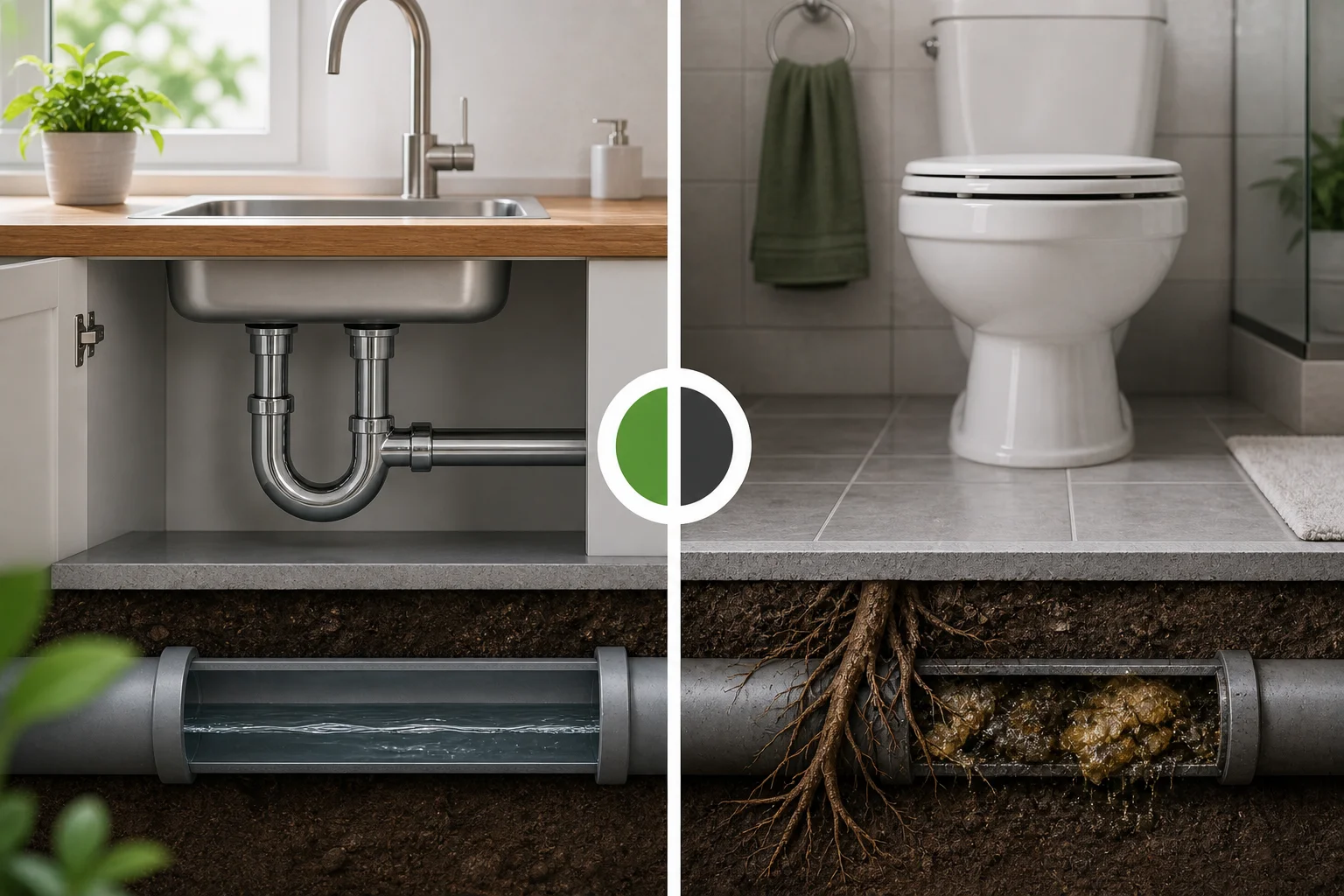
When water backs up in your home, it can mean two very different things. It might be a single clogged drain, which is a common and usually minor problem. Or it could be a main sewer line backup, which affects the entire house and needs to be treated as an emergency.
Knowing which one you are dealing with matters because the response is completely different. A drain clog you can sometimes handle yourself or schedule a routine service call. A sewer line backup needs a plumber out the same day, and in some cases, you need to stop using all the water in your house until it is resolved.
At Blueline Plumbing in Woodland, CA, we get calls about both regularly. The quickest way to tell them apart is to look at how many fixtures are affected and whether the backup is showing up in unexpected places.
The Fastest Way to Tell Them Apart
A single drain backing up almost always means a localized clog in that one line. One slow sink, one backed-up shower, one toilet that will not flush — these are isolated problems.
A sewer line backup shows up in multiple places at once, often in places that make no obvious sense. You flush the toilet and water comes up in the bathtub. You run the washing machine and the kitchen sink gurgles. You use the bathroom sink and the toilet bubbles. When water that goes down one fixture starts appearing at a completely different fixture, the main sewer line is the problem.
That crossover behavior happens because all the drains in your home connect to a single main sewer line that runs out to the street. When that line is blocked, water has nowhere to go and finds the nearest low point to back up into, which is usually the tub, the shower, or the floor drain.
Signs You Have a Drain Clog
A drain clog is contained. Here is what it looks like:
One fixture is slow or backed up while everything else in the house works normally. The kitchen sink drains slowly but the bathroom sink, shower, and toilets all work fine. Or one specific toilet runs slow but the others are normal.
The backup clears on its own after a few minutes, or moves slowly rather than coming back up immediately. Water drains but takes longer than it should.
You have not noticed any gurgling from other fixtures. The plumbing in other parts of the house is quiet and draining normally.
There is no smell of sewage coming from the drain. A single localized clog usually does not produce the sulfur smell associated with sewer gas.
A drain clog in the kitchen is usually grease or food debris. In the bathroom it is almost always hair and soap buildup. In the toilet it is typically too much paper or something that should not have been flushed. These are all fixable with a snake or rooter service on that one drain.
Signs You Have a Sewer Line Backup
A sewer line backup is a house-wide problem. These are the signs that point to it:
Multiple drains are slow or backed up at the same time. This is the most important signal. When more than one fixture is affected simultaneously, the problem is in the shared line, not in individual drains.
Water appears where it should not when you use a different fixture. Flush the toilet and watch the bathtub. If water comes up in the tub drain when you flush, that is a sewer line problem. Run the bathroom sink and check if the toilet water level rises or bubbles. That crossover is the giveaway.
You hear gurgling from drains after using any fixture. Gurgling means air is being pushed through the line by water that has nowhere else to go.
There is a sewage smell in the house, particularly near floor drains, the lowest bathroom, or the basement if you have one. Raw sewage backing up into the line produces a strong, unmistakable smell.
The washing machine drains and water comes up in a sink or toilet nearby. The washing machine empties a large volume of water quickly and puts the most strain on a partially blocked main line.
You have already had a plumber clear a specific drain and it backed up again within a short time, even though the plumber confirmed the drain itself was clear.
Any combination of these signs points to the main sewer line rather than an individual drain.
What Causes a Sewer Line Backup
Understanding the cause matters because it determines the fix. The most common causes in Woodland, CA are the following.
Tree root intrusion. Woodland has mature oak, elm, and sycamore trees throughout most of its established neighborhoods. Their root systems grow toward water, and the main sewer line running from your house to the street is one of the most reliable moisture sources underground. Roots enter through hairline cracks in older clay or cast iron pipes, grow inside the line, and eventually block it completely. This is the single most common cause of main sewer line problems in older Woodland homes.
Grease and debris accumulation. Over years of use, grease, soap, and debris build up gradually in the main sewer line the same way they do in individual drains, just over a longer distance. The accumulation eventually narrows the line enough to cause backups, particularly when a heavy flow hits it all at once.
Pipe damage or collapse. Older clay pipes in particular are prone to cracking, shifting, and in some cases collapsing under the weight of soil above them. A damaged or partially collapsed pipe creates a choke point that backs up the entire system. This is more common in homes built before the 1980s.
A foreign object in the main line. Wipes, paper towels, feminine hygiene products, and other non-flushable items can make it past an individual toilet and into the main sewer line, where they accumulate and eventually block the line completely.
Municipal sewer issues. In some cases, the problem is not in your private sewer line at all. The city’s main sewer line on the street can become blocked or overwhelmed, which causes backups in homes connected to that section. If multiple neighbors are experiencing the same problem at the same time, call the City of Woodland’s public works department before calling a plumber.
What to Do If You Have a Sewer Backup
Stop using water in the house as much as possible until the line is cleared. Every time you flush, run a tap, or use the washing machine, you are adding more water to a line that cannot drain. This increases the risk of sewage backing up further into the house.
Do not use chemical drain cleaners. They will not touch a main sewer line blockage, and if a plumber needs to work in the line afterward, caustic water is a serious safety hazard.
Call a plumber for same-day service. A sewer line backup is not something to wait on. Sewage backing up into a home creates a health hazard and can cause significant damage to floors, walls, and any belongings in lower areas of the house.
If sewage has already backed up into living areas, do not walk through it without protective footwear. Sewage contains bacteria and pathogens. Ventilate the area and keep children and pets away until it is cleaned up properly.
Identify your main sewer cleanout if you can. It is usually a capped pipe in the yard, near the foundation of the house, or sometimes inside near a floor drain. Telling the plumber where it is when they arrive saves time.
How a Plumber Diagnoses and Clears a Sewer Backup
When Blueline Plumbing responds to a sewer backup call in Woodland, the process usually goes in this order.
We confirm which fixtures are affected and narrow down whether the problem is in the main line or a branch line feeding a specific area of the house.
We access the main cleanout and run a rooter machine into the line to clear whatever is blocking it. For most backups, this restores drainage immediately.
If the backup keeps returning, or if there is reason to suspect root intrusion or pipe damage, we run a camera inspection through the line. The camera shows exactly what is inside and where the problem is located, which determines whether rooter service is sufficient or whether the pipe needs repair.
For root intrusion, rooter service with a cutting head removes the roots and restores full flow. Depending on the extent of the intrusion, we may also recommend hydro-jetting to remove root material from the pipe walls completely.
For a damaged or collapsed pipe section, the repair depends on how bad the damage is and where it sits. In many cases, pipe lining, which involves inserting a resin-coated liner into the existing pipe and curing it in place, avoids the need to dig up the yard. In more severe cases, pipe replacement is the right solution.
When to Call Right Away vs. When You Can Wait
Situation | What to Do |
|---|---|
One drain is slow, everything else is fine | Schedule a routine service call |
One drain is completely backed up, others fine | Call within the day |
Multiple drains slow at the same time | Call a plumber today |
Toilet gurgles when sink or shower drains | Call a plumber today |
Water backs up into tub when you flush the toilet | Call immediately, stop using water |
Sewage smell in the house | Call immediately |
Standing sewage in a lower bathroom or floor drain | Call immediately, avoid the area |
Neighbor has same problem at the same time | Call the city first, then a plumber |
Frequently Asked Questions
No. A main sewer line blockage does not clear on its own. The backup will continue and typically worsen every time water is used in the house. Tree roots that have entered the line continue growing. Grease and debris that caused a partial blockage will accumulate further. A sewer line backup always requires professional clearing.
Main sewer line rooter service to clear a standard backup typically runs $200 to $400. If a camera inspection is needed, add $150 to $300, though Blueline Plumbing often includes this or reduces the fee when combined with service. Hydro-jetting for a severe blockage runs $300 to $600. Pipe repair or lining, if a damaged pipe is found, varies depending on the extent and location of the damage. We provide a full estimate before any repair work begins.
For a standard rooter service, most sewer backups can be cleared in one to two hours from the time we arrive. If a camera inspection reveals root intrusion or pipe damage that requires additional work, the timeline depends on what the repair involves. We will give you a clear timeframe after diagnosing the problem.
If multiple neighbors on your street are experiencing drain backups at the same time, the problem is likely in the city’s portion of the sewer system. Call the City of Woodland Public Works at (530) 661-5977. If your neighbors are not affected and the issue is isolated to your home, the problem is in your private sewer line.
Yes. Root intrusion is one of the most common causes of main sewer line failure in Woodland. Fine root tips enter through existing cracks, grow into the line, and over time create a mass that blocks the pipe almost entirely. Homes with large oak or elm trees within 20 to 30 feet of the sewer line are at higher risk, especially if the pipes are original clay or cast iron from before the 1980s.
The most effective prevention for Woodland homes with mature trees nearby is a camera inspection every two to three years. Catching root intrusion early, before it causes a full backup, means a simpler and less expensive fix. Avoiding flushing anything other than toilet paper, keeping grease out of the kitchen drain, and having the main line hydro-jetted periodically all reduce the risk as well.
The Bottom Line
If one drain in your house is backed up, you most likely have a localized clog. If multiple drains are affected, or if water is appearing at unexpected fixtures when you use a different one, you have a sewer line problem that needs attention the same day.
A sewer backup does not sort itself out, and waiting makes it worse. The longer a blocked main line sits, the higher the risk of sewage backing up further into the house.
Blueline Plumbing serves Woodland, Davis, West Sacramento, Vacaville, and surrounding areas. We offer same-day service for sewer line emergencies, free estimates before any work begins, and upfront pricing with no hidden fees.
Call us any time at (530) 902-3403.