
How Often Should You Get Your Drains Professionally Cleaned?
Table of Contents
For most homes, professional drain cleaning once every one to two years is the right interval. Households with heavy usage, older pipes, or large trees near the sewer line benefit from annual service. Homes with newer pipes, fewer occupants, and no history of drain problems can often go two years between cleanings without issue.
That is the short answer. The longer answer depends on your specific home, how your drains are used, and a few conditions that are common in Woodland, CA and worth knowing about.
Why Drain Cleaning Is Maintenance, Not Just Emergency Response
Most homeowners only think about drain cleaning when something backs up. A drain clogs, they call a plumber, the plumber clears it, and the drain goes back to normal. The cycle repeats the next time there is a problem.
That approach works, but it is more expensive and more disruptive than treating drain cleaning as routine maintenance. By the time a drain fully backs up, the buildup that caused it has been accumulating for months or years. At that stage you are looking at rooter service or hydro-jetting to clear a significant obstruction rather than a routine cleaning on a pipe that is still in reasonable shape.
Think of it the same way you think about changing the oil in a car. You could wait until the engine starts making noise, but you would pay more and do more damage than if you had just stayed on a maintenance schedule. Drains work the same way.
Routine professional cleaning removes buildup before it becomes a blockage, extends the life of the pipes, and keeps the whole system running efficiently. It also gives the plumber a chance to spot problems early, like small cracks, root tips entering the line, or early-stage scaling, before they turn into bigger repairs.
The Right Cleaning Frequency for Different Households
There is no single answer that applies to every home. The right interval depends on a combination of factors specific to your household and your property.
Once a Year
Annual drain cleaning makes sense for households where any of the following apply.
You have three or more people living in the home. More occupants means more hair, more grease, more soap, and more daily use on every drain in the house. Buildup accumulates faster.
Your home was built before the 1990s. Older homes in Woodland often have original clay or cast iron pipes that have narrowed from decades of mineral scaling. The reduced diameter means buildup becomes a problem faster than in newer pipes.
You have large trees in the yard or along the street parkway within 20 to 30 feet of your sewer line. Woodland’s mature oaks, sycamores, and elms have root systems that actively seek out sewer lines. Annual rooter service keeps roots cleared before they grow large enough to cause a full backup.
You have had recurring drain clogs in the past. If a drain has backed up more than once in the last two years, annual cleaning keeps you ahead of it rather than responding to it.
You use your kitchen drain heavily. Households that cook frequently put more grease and food debris into the kitchen line than those that do not. A kitchen drain in a home where someone cooks daily loads up faster than one in a home where the sink is mainly used for rinsing.
Every 18 Months to Two Years
This range works well for average households with no specific risk factors. Two to three occupants, a home built after the 1990s, no major trees near the sewer line, and no history of recurring clogs. If that describes your home, a cleaning every 18 to 24 months keeps the pipes in good shape without over-servicing them.
Every Two to Three Years
For smaller households, one or two people, newer construction, modern PVC pipes, and minimal cooking, a cleaning every two to three years is reasonable. These homes accumulate buildup slowly and tend not to have the hard water scaling and root intrusion risks that come with older Woodland properties.
That said, going beyond three years between professional cleanings is not something we recommend for any home, regardless of the situation. Even light-use pipes accumulate enough over three years that a cleaning is worthwhile.
What Makes Woodland, CA Homes Different
A few local conditions are worth factoring into your cleaning schedule if you own a home in Woodland or the surrounding area.
Hard water from the Sacramento River system. Woodland’s water supply carries dissolved calcium and magnesium that deposit on the inside of pipes over time. This mineral scaling gradually narrows the pipe interior and creates a rough surface that catches debris much more easily. Homes that have been in the same condition for 10 or more years often have pipes that are meaningfully narrower than their original diameter. Annual or biennial cleaning helps control this.
Mature tree coverage. Woodland is one of the more heavily treed cities in the Sacramento Valley, which is part of what makes it a nice place to live and also a higher-risk environment for sewer line root intrusion. If your home is in an older neighborhood with large street trees or mature landscaping, factor that into how frequently you service the main line.
Older pipe materials. Many homes in Woodland built before 1980 still have original clay or Orangeburg pipes in the main sewer line. These materials crack and degrade over time in ways that modern PVC does not. They also allow root intrusion more easily. If your home has not had a camera inspection in the last several years and you do not know what your sewer line is made of, that is worth finding out.
Which Drains Need Cleaning Most Often
Not all drains in your home accumulate buildup at the same rate. Knowing which ones are higher priority helps you decide where to focus.
Kitchen drain. The highest-traffic drain in most homes and the one most likely to accumulate grease. Even households that are careful about what goes down the kitchen sink see gradual fat and soap buildup in the line. The kitchen drain benefits most from regular professional cleaning.
Main bathroom drain or shower. Hair and soap scum are the primary culprits here. A mesh hair catcher reduces buildup significantly but does not eliminate it entirely. The main bathroom shower or tub drain in a multi-person household should be on the cleaning schedule.
Main sewer line. This is the pipe that all the individual drains feed into before the wastewater leaves the property. Keeping this line clear is the most important maintenance task in the house because a blockage here affects every fixture simultaneously. In a home with older pipes or nearby trees, the main sewer line deserves attention at least annually.
Secondary bathroom drains. Guest bathrooms and infrequently used drains are lower priority. Ironically, drains that are rarely used can dry out and develop issues, but they accumulate far less buildup than primary drains.
Signs You Have Waited Too Long Between Cleanings

If any of these are happening in your home, the cleaning schedule has slipped and it is time to call.
Water draining noticeably slower than it used to in the kitchen or bathroom. Slow drainage is the first sign of accumulation that has passed the threshold where it is affecting flow.
A faint smell coming from a drain even when it has not been used recently. Buildup in the pipe can produce odor even without a full clog.
Gurgling sounds from drains after using a nearby fixture. Gurgling indicates airflow problems in the line, often caused by partial obstruction.
A drain that keeps coming back as slow even after you have cleaned the screen and removed visible debris from the opening.
Any of these is a sign that the buildup is already significant. At that point, routine maintenance cleaning has become a problem that needs fixing.
What Professional Drain Cleaning Covers vs. What It Does Not
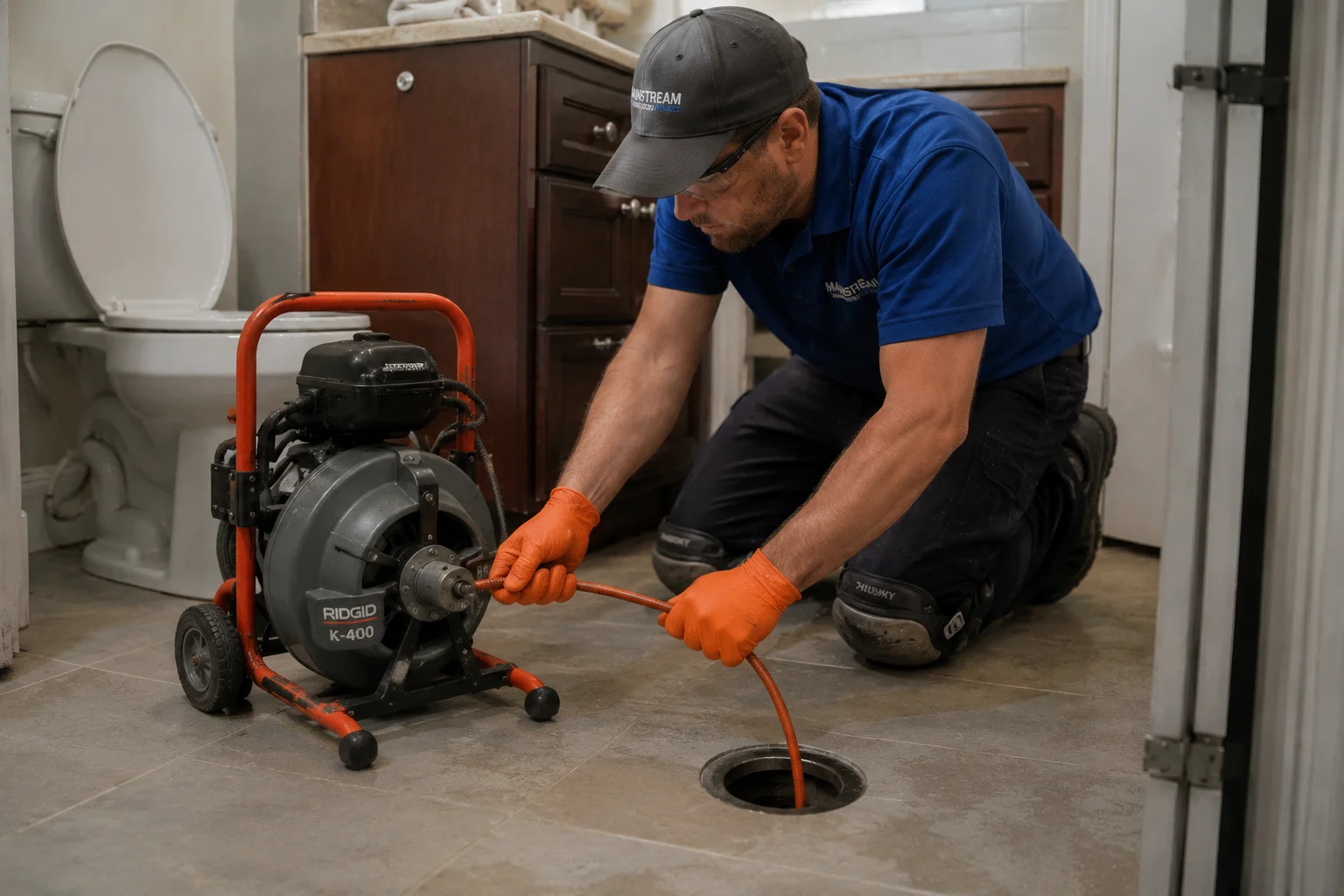
A professional drain cleaning removes accumulated buildup from inside the pipe. Depending on what is found, that might mean a standard drain snake for a bathroom or kitchen fixture, rooter service for the main sewer line, or hydro-jetting for a line with heavy grease or mineral scaling throughout.
What it does not do is repair pipe damage, fix a root intrusion that has been growing for years, or address a pipe that has collapsed or shifted. If a routine cleaning reveals any of those problems during inspection, that is a separate conversation with separate options.
A plumber who does maintenance cleanings for a home over time builds familiarity with that specific property. They know what the pipes looked like last year and can tell you whether something has changed. That continuity is worth more than it might seem when a problem is caught early.
Frequently Asked Questions
Slow drainage is the most common early indicator. If a drain that used to clear quickly now takes noticeably longer, buildup is accumulating inside the pipe. A faint drain odor without an obvious source is another sign. If you cannot remember the last time the drains were professionally cleaned and it has been more than two years, that is reason enough to schedule a service.
Basic maintenance like monthly hot water flushes, using a mesh hair catcher, and keeping grease out of the kitchen drain all help slow buildup. A hand drain snake can clear a fresh, accessible clog in a bathroom fixture. But DIY methods do not reach deep enough to clean the main sewer line, cannot remove hardened grease or mineral scaling from pipe walls, and cannot diagnose what is happening further down the line. Professional cleaning addresses the full pipe, not just what is reachable from the drain opening.
Yes, meaningfully. Older homes in Woodland with original clay or cast iron pipes narrow from scaling over decades and are more vulnerable to root intrusion. These homes generally need annual cleaning regardless of occupancy. Newer homes with PVC pipes are smoother, less prone to scaling, and can often go two years between services with no issues.
A plumber accesses the drain, assesses what method is appropriate, and runs a snake or rooter machine through the line to clear accumulated buildup. For a main sewer line cleaning, they typically work from the cleanout access point in the yard. After clearing, the plumber checks that the drain is flowing freely and may recommend a camera inspection if anything looked unusual during the service.
Not necessarily. The main sewer line and the highest-use drains, kitchen and primary bathroom, are the priority. Secondary drains in guest bathrooms or utility areas that see minimal use can often be skipped unless they show signs of slowing. Grouping the priority drains into a single service call is more efficient and cost-effective than multiple visits.
The Bottom Line
Most Woodland, CA homeowners should have their drains professionally cleaned once every one to two years. Annual service makes sense for older homes, larger households, homes with mature trees near the sewer line, or any property with a history of recurring clogs. A two-year interval works for newer construction with lighter use and no specific risk factors.
The cost of staying on a maintenance schedule is consistently lower than the cost of dealing with a backed-up drain as an emergency. And it keeps the pipes in the kind of condition where early problems get found before they become expensive ones.
Blueline Plumbing offers routine drain cleaning and main sewer line service throughout Woodland, Davis, West Sacramento, and Vacaville. We show up on time, give you a straight answer about what your pipes need, and price the work upfront.